
Key Takeaways
- Drones are revolutionizing exterior cleaning by enhancing safety, efficiency, and cost-effectiveness.
- They provide access to hard-to-reach areas without the need for scaffolding or ladders.
- Drone technology is being applied in various sectors, including residential, commercial, and industrial cleaning.
- Environmental benefits include reduced water usage and minimized chemical runoff.
- Regulatory compliance and operator training are essential for the successful implementation of drone cleaning services.
Table of Contents
- Introduction
- Enhancing Safety and Efficiency
- Applications in Various Sectors
- Environmental Benefits
- Regulatory Compliance and Training
- Future Prospects
- Conclusion
Introduction
The exterior cleaning industry is witnessing a profound transformation as drone technology becomes increasingly integrated into service delivery. Traditional cleaning processes for roofs, windows, and building exteriors often pose significant safety hazards and entail high labor costs due to the need for ladders, scaffolding, or lifts. Today, these risks and inefficiencies are being addressed as property owners and service providers turn to innovative solutions like drone washing. By reaching formerly inaccessible surfaces and conducting thorough cleaning while operators remain safely on the ground, drones are setting new standards for both safety and performance. This technology does not just streamline the job; it is also influencing expectations and regulations in the cleaning industry worldwide.
The benefits of drone cleaning services go beyond convenience. Companies are adopting drones to reduce costs associated with manual labor and equipment rentals. At the same time, risks associated with working at heights are being minimized, thereby improving workplace safety and reducing the risk of accidents.
As drone integration expands, diverse applications have emerged across residential, commercial, and industrial markets, each leveraging the unique capabilities of uncrewed aerial vehicles. The adaptability and efficiency of drones are rapidly setting them apart as the modern standard for exterior cleaning. For businesses handling properties with extensive facades or requiring regular maintenance, commercial drone washing is proving especially advantageous in managing time, costs, and disruptions to daily operations. Safety remains one of the most compelling reasons to adopt drone technology for exterior cleaning. By replacing the need for human workers to scale tall buildings or maneuver around dangerous ledges, drones substantially cut the risk of falls and other occupational hazards. Operators use remote controls to guide drones, keeping both themselves and their teams safely on the ground.
Enhancing Safety and Efficiency
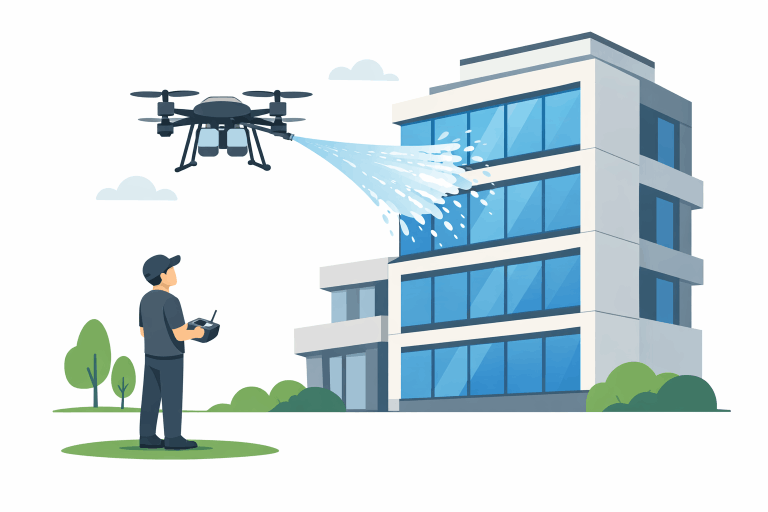
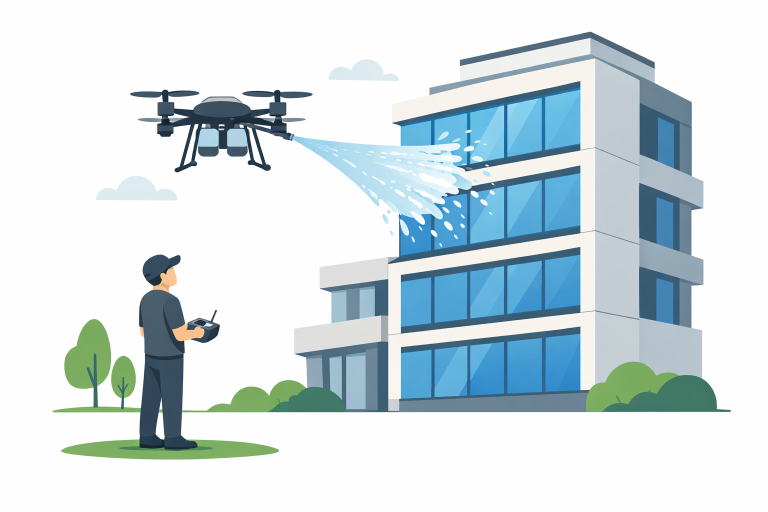
Safety remains one of the most compelling reasons to adopt drone technology for exterior cleaning. By replacing the need for human workers to scale tall buildings or maneuver around dangerous ledges, drones substantially cut the risk of falls and other occupational hazards. Operators use remote controls to guide drones, keeping both themselves and their teams safely on the ground.
Efficiency is also a major benefit. Drones can easily access high roofs, multi-story windows, or industrial equipment, completing tasks in a fraction of the time required by manual methods. The ease of setup and reduced reliance on complex machinery mean exterior cleaning can be delivered swiftly, with minimal downtime for property owners. In commercial settings, this often means buildings can return to normal operations much faster than with traditional cleaning processes.
Applications in Various Sectors
Drones are not limited to any single application. Their ability to deliver targeted, reliable cleaning services spans several key markets:
- Residential Cleaning: Drones give homeowners the ability to maintain clean roofs, gutters, and siding without the dangers of DIY cleaning or the expense of specialty contractors. Hard-to-reach spots and delicate surfaces are handled with precision.
- Commercial Cleaning: Business locations with large glass facades, signage, or multi-story windows can be efficiently cleaned with minimal impact on daily activities. Drones enable maintaining appealing exteriors even in the tallest buildings.
- Industrial Cleaning: In large-scale settings like factories, warehouses, and utility plants, drones are utilized to clean both structural surfaces and complex equipment without interrupting core operations.
Expansion of drone cleaning services continues as industries discover new applications, driven by ongoing improvements in flight stability, camera resolution, and precision spraying mechanisms. According to Cleaner Times, commercial drones are evolving rapidly, with their roles in maintenance and inspection expected to diversify even further in the coming years.
Environmental Benefits
Drones are making significant contributions to sustainability initiatives in the cleaning industry. Because they target cleaning solutions directly to where they are needed, overall water consumption is reduced. This water-saving precision ensures efficient cleaning without the excessive runoff and overspray typical of conventional equipment. Moreover, drone technology allows for the precise application of detergents and cleaning agents. As a result, chemical usage is minimized, and the environmental impact of exterior cleaning is greatly reduced. Through smarter resource deployment, the industry is playing its part in mitigating pollution and supporting green practices. This targeted approach aligns with increasing regulatory demands for eco-friendly business practices and supports long-term environmental stewardship.
Regulatory Compliance and Training
While the benefits of drones are clear, their use is heavily regulated. Most jurisdictions require operators to obtain specialized training and certification, ensuring public safety and privacy protection. Compliance with aviation standards, drone registration with relevant authorities, and adherence to best practices for flight operations are crucial steps for launching successful drone-based cleaning services. In addition to mandatory pilot certifications, companies must stay up to date on evolving legislation governing the commercial use of drones. Failure to do so can lead to legal penalties or operational halts. As drone applications grow more complex, ongoing education and skills development for operators will become even more critical.
Future Prospects
The momentum behind drone-assisted exterior cleaning shows no signs of slowing. Ongoing advancements in battery life, payload capacity, and artificial intelligence are expected to optimize cleaning procedures further and reduce operating costs. As the regulatory landscape matures and best practices are refined, both residential and business customers are likely to see even broader access to drone cleaning services. Looking forward, drones could take on additional roles, including inspections, repairs, and environmental monitoring, creating an ecosystem of integrated, technology-driven property care.
Conclusion
Drones are transforming the exterior cleaning industry by introducing safer, more efficient, and sustainable practices. Their capacity to access challenging spaces while minimizing both environmental and safety risks positions them as a vital asset across residential, commercial, and industrial sectors. As this technology continues to advance, businesses and property owners alike should expect drones to play an increasingly central role in the maintenance and enhancement of building exteriors.